
One of the deadliest and costliest hurricanes in recent US history, Hurricane Helene caused billions of dollars in damage and at least 230 fatalities. We’re highlighting two non-profit organizations making a difference in the lives and communities of those who continue to be impacted by the storm.
WRITTEN BY Bek Mitchell-Kidd
One of the deadliest and costliest hurricanes in recent US history, Hurricane Helene caused billions of dollars in damage and at least 230 fatalities. North Carolina suffered the highest death toll, with more than 100 confirmed deaths.
Most fatalities were attributed to flooding, with some also caused by falling trees, vehicle crashes and a tornado. Thousands of homes and businesses were destroyed as well as major infrastructure—including roads, bridges and water systems that are still under repair today.
We’re highlighting two non-profit organizations making a difference in the lives and communities of those who continue to be impacted by the storm. Please consider making a donation; every dollar truly counts.
Brother Wolf Animal Rescue
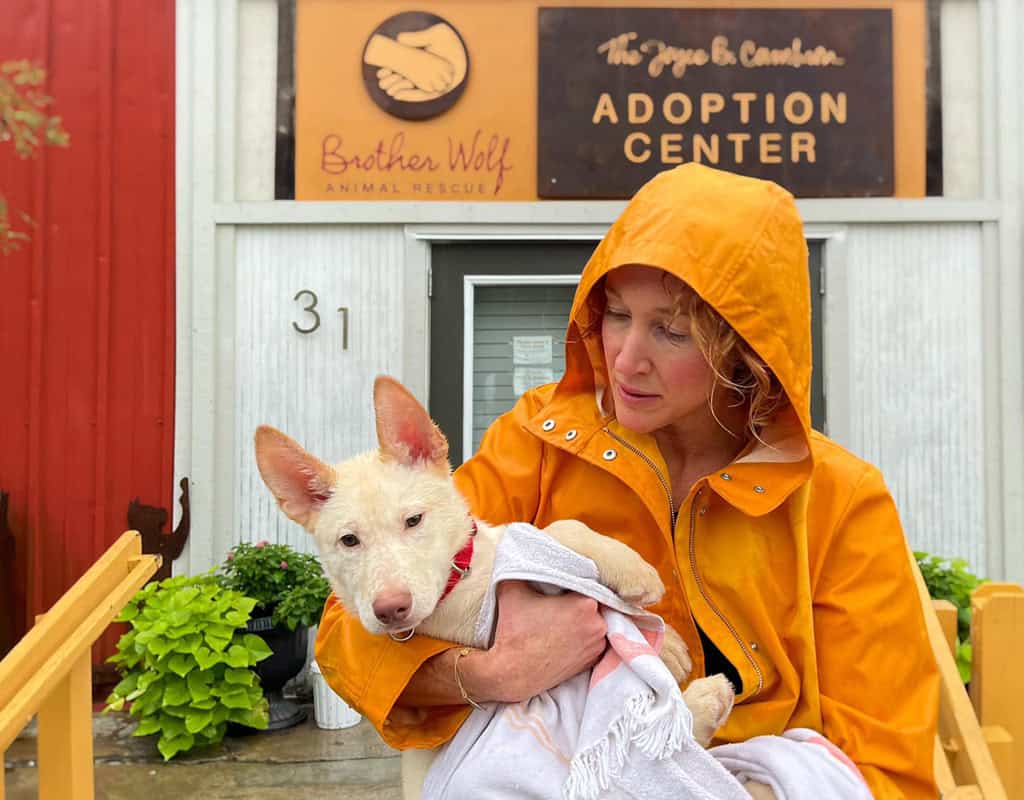
In the aftermath of Hurricane Helene, Brother Wolf faced immense challenges. The shelter—a space that had saved over 100,000 animals since 2007—was tragically lost in the floodwaters, along with all their physical assets (all the animals were safely evacuated during the storm).
Brother Wolf plans to rebuild, partnering with a firm that specializes in building shelters, and is actively working to secure a location at a higher elevation in the Asheville area.
The non-profit continues to operate its programs out of a temporary facility in Asheville.
Leah Craig Chumbley, Executive Director, says, “Brother Wolf exists for moments like this—when animals are in danger and families are in crisis. After Hurricane Helene destroyed our animal shelter, caring people from across the country came together to keep our critical lifesaving work going so that we could continue to be here every day for the animals who depend on Brother Wolf.”
Now, they’re rebuilding and dreaming up a future of even greater impact for homeless animals.
“It’s a big project, and it will take the generosity of many animal lovers to bring it to completion. In the end, it will be a bright light that comes out of the Helene devastation and will save thousands of animals’ lives for decades to come,” says Leah.
HOW YOU CAN HELP: BROTHER WOLF ANIMAL RESCUE
Foothills Food Hub
In the wake of Hurricane Helene, McDowell Local Food Advisory Council (LFAC) and Foothills Food Hub, alongside partner organizations, swiftly mobilized to provide emergency relief.
One day after the storm, the Foothills facility became a central hub for sourcing critical supplies, including water and ready-to-eat food, strategically positioned next to McDowell County EMS and the Emergency Operations Center (EOC).
They provided daily meals for over 1,000 service members stationed at the EOC, including personnel from the National Guard, FEMA, EMS and other agencies.
In partnership with the EOC and local organizations, Foothills Food Hub also backpacked critical supplies to isolated, hardest-hit areas, witnessing firsthand the heartbreaking devastation left in the storm’s wake.
Today, they remain dedicated to addressing community needs through ongoing food distributions and new programs like delivering preprepared meals made with farm-fresh ingredients to vulnerable populations. They are committed to ensuring no one is left behind as they continue to rebuild and support the community.
“Disaster response taught us the power of community resilience and the importance of swift, local action. We are committed to being here for our neighbors, whatever the need may be,” says Audrey Moore, Media and Marketing Coordinator for McDowell LFAC and Foothills Food Hub.
HOW YOU CAN HELP: FOOTHILLS FOOD HUB