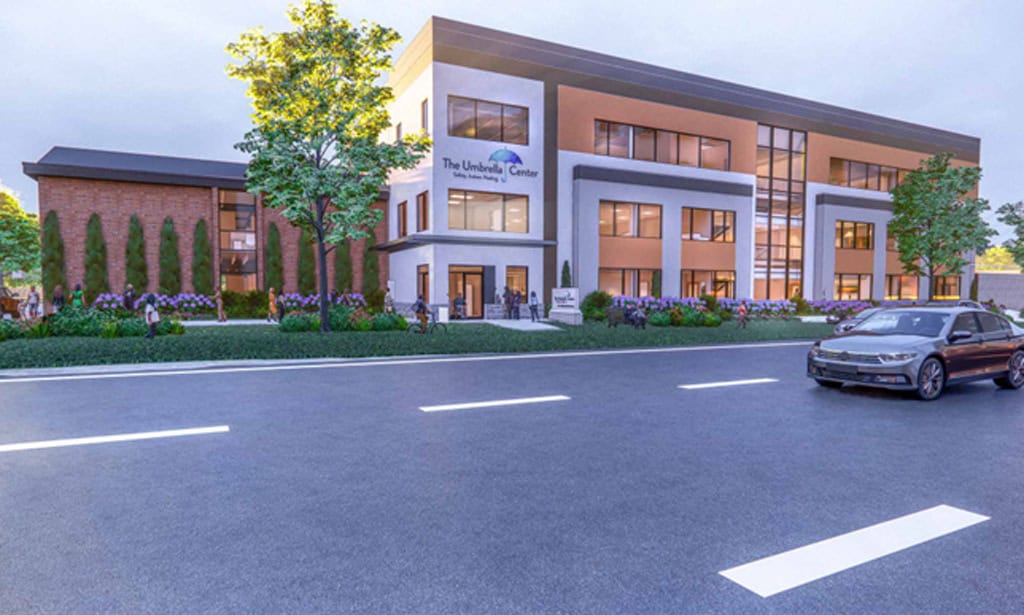
The Umbrella Center—a collaborative of nonprofit and public organizations dedicated to serving victims of interpersonal and family violence—is scheduled to open in Charlotte later this year. Its innovative approach will help transform services for the vulnerable in the community.
What is the Family Justice Center Model?
The model puts survivors first.
Family justice centers are more than a proven shared-services model—they save lives. By improving victim survival, reducing violence, and preventing homicides, they are recognized as a national best practice.
The Umbrella Center will take this model further, creating a safe haven that not only serves survivors of domestic and family violence but also offers innovative support for children, elders, and victims of human trafficking—helping the most vulnerable find safety, hope, and a path forward.
Why the Existing Approach Isn’t Enough
The current system isn’t serving those who need it the most.
Victims are often forced to navigate a maze of complex systems to access help. On average, an adult victim must:
- visit nine different locations,
- complete 37 pages of paperwork,
- and recount their story 27 times.
Many give up before receiving the support they need.
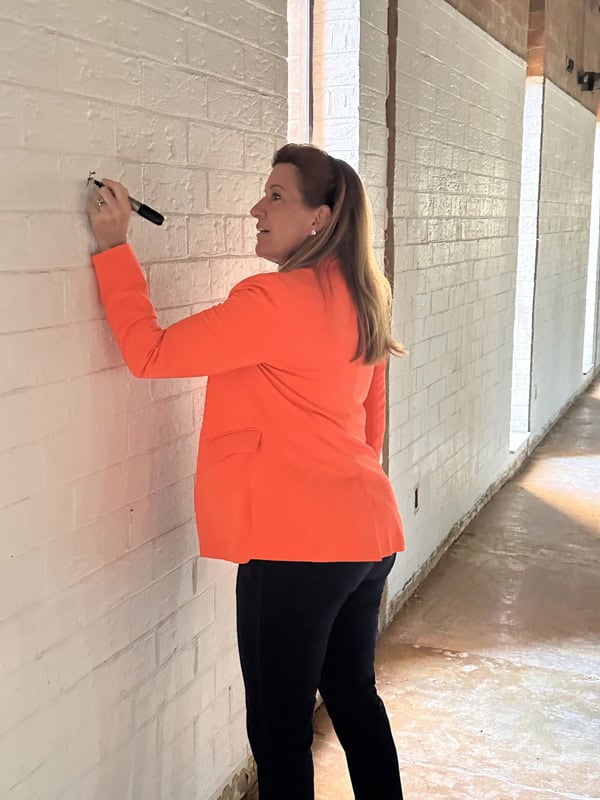
The Umbrella Center will change each step of a victim’s experience—from police response to medical care, advocacy, counseling, and court procedures—and help people recover their lives.
Victims will receive holistic, trauma-informed care that addresses both urgent needs and the deeper factors driving generational violence and abuse. In a warm and supportive environment, they will be able to focus on healing while gaining access to comprehensive resources that promote safety, stability, and emotional well‑being, including counseling, advocacy, legal support, housing resources, and healthcare.
Once open, The Center is expected to serve more than 10,000 people of all ages annually, helping turn moments of crisis into paths toward healing and hope.
Proven Results are More Than Numbers—They Represent Lives Saved and Futures Restored
Since the first Family Justice Center opened in San Diego in 2002, the model has grown to more than 150 centers in the US and over 300 worldwide.
Yet Charlotte-Mecklenburg remains one of the largest metropolitan areas in the country without this critical resource.
- San Diego saw a 95% drop in domestic violence-related homicides during the first 15 years of its family justice center.
- Guilford County, NC, has experienced a 77% reduction in domestic violence-related homicides since opening its center in 2015.
What Other Organizations are Involved?
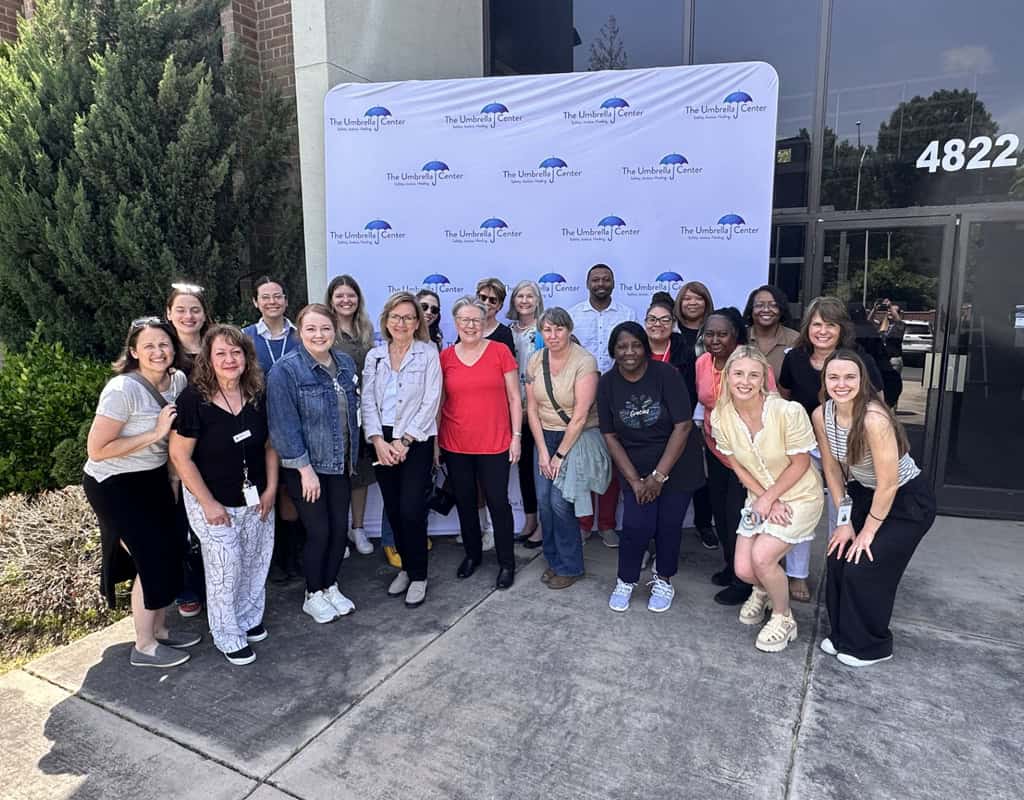
The Umbrella Center will co-locate approximately 250 staff from 15 agency partners to streamline case investigations, mitigate barriers to effective care, and support healing after abuse.
This coalition of partners, including non-profits Pat’s Place Child Advocacy Center and Safe Alliance, law enforcement agencies, the County’s Departments of Social Services and Community Support Services, the District Attorney’s Office, and regional health providers Atrium Health and Novant Health.
There will be a single intake process allowing victims to convey their abuse in an effective and dignified manner. A personal navigator will lead them through all available and needed services.
Healing For One. Strength For All.
A victim-centered, trauma-informed model not only transforms individual lives—it strengthens the entire community by addressing both immediate needs and long-term outcomes, including:
Improving public health: The Umbrella Center will reduce the burden on emergency rooms by providing specialized, trauma-informed forensic care for victims of domestic and sexual violence and child abuse. While on-site clinics offering general healthcare and mental health services will serve as a health home for thousands of vulnerable residents.
Increasing economic mobility: 50% of domestic violence victims lose their jobs due to their victimization. The Umbrella Center will provide job support, financial assistance, counseling, and free on-site childcare, helping survivors maintain employment and housing, reducing the risk of further victimization, and fostering long-term stability for families.
“Road to Resolution proudly supports The Umbrella Center because survivors of abuse deserve more than sympathy; they deserve a trauma-informed system that meets them with dignity, safety, and coordinated care when they need it most.” —Robin M. Mermans
Under One Umbrella, Here’s How to Stand With Survivors
The Umbrella Center is at a critical time in bringing this important partnership to life for the Charlotte community. To date, over $47 million of the $49 million in private and public dollars has been committed.
Mecklenburg County has committed $10 million to the project and will also own and maintain the building once complete, allowing the nonprofits to focus on providing services.
Several law firms and individual attorneys have already supported the initiative, including Modern Legal, Moore Van Allen, McGuire Woods, and ROAD to RESOLUTION—Divorce Mediation & Collaborative Family Law.
Robin M. Mermans, principal attorney at ROAD to RESOLUTION and a Capital Campaign Cabinet member of The Umbrella Center, explains why she is involved: “Road to Resolution proudly supports The Umbrella Center because survivors of abuse deserve more than sympathy; they deserve a trauma-informed system that meets them with dignity, safety, and coordinated care when they need it most. As an attorney and as a member of this community, I have seen firsthand how fragmented systems can compound harm. The Umbrella Center changes that by bringing critical services together in one place and sending a clear message to survivors: you are believed, you are supported, and you do not have to navigate this alone. Supporting this work is both a professional responsibility and a deeply personal commitment to building a safer, more compassionate community.”
To make a donation or learn how to get involved, visit The Umbrella Center or contact Tori Marshall at tori.marshall@safealliance.org.