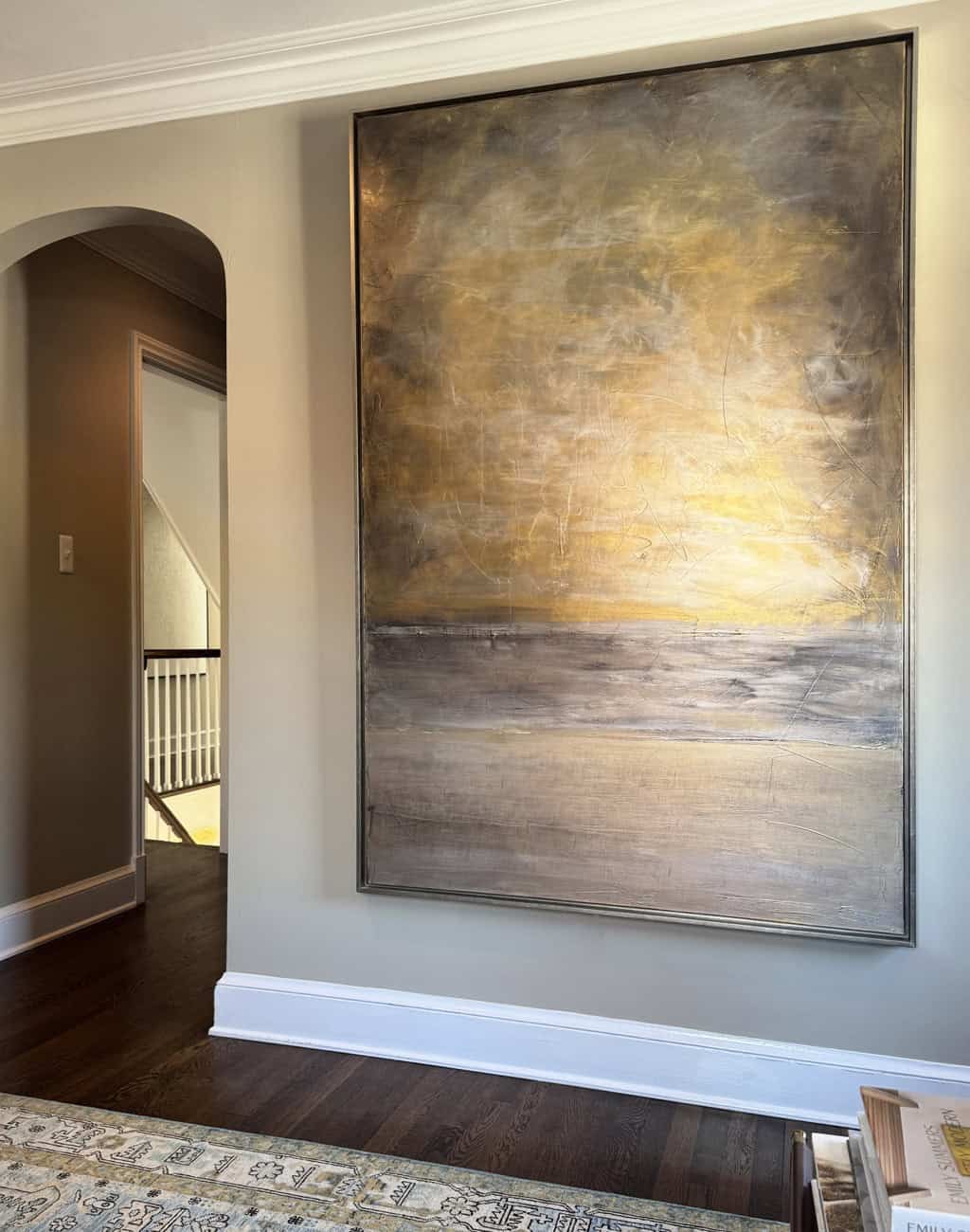
We recently had a chance to chat with Washington D.C.-based artist, Leslie Archer. Her vibrant and expressive paintings can be found not only in galleries in and around the city but throughout the United States, Europe and Asia.
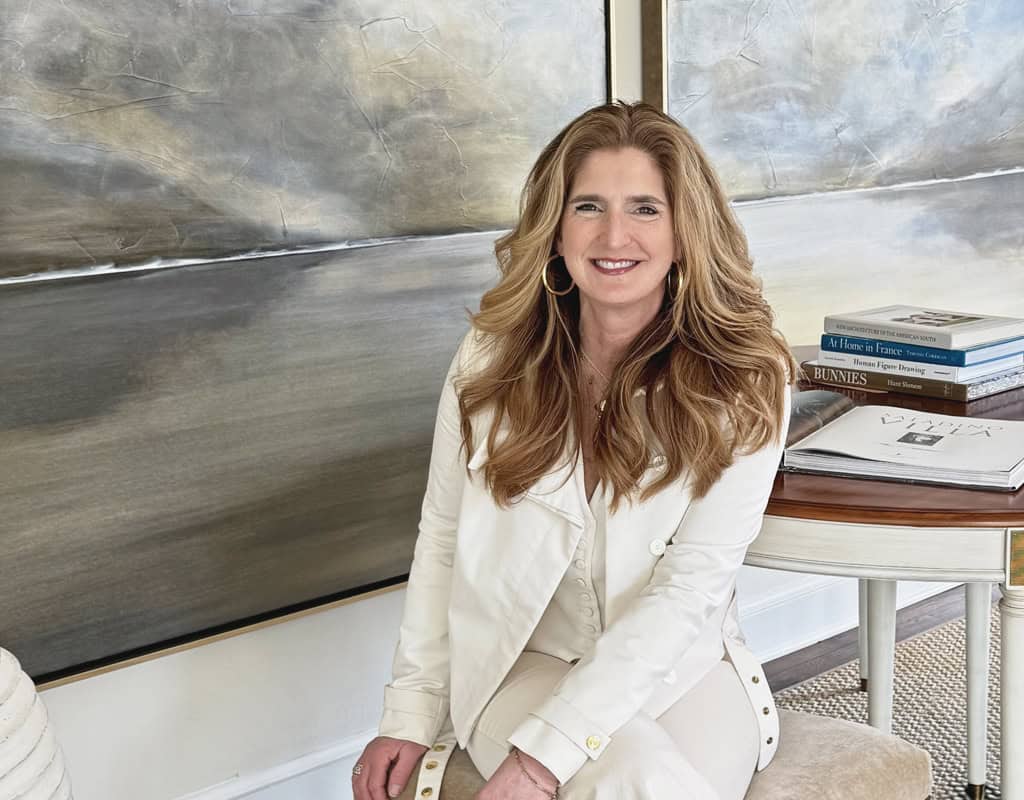
How did your early life and upbringing shape your passion for abstract art and design?
From a young age, art and architecture became deeply ingrained in me. When I was 10, my family moved to Europe, and what was meant to be a few years turned into an unforgettable chapter of my life. Most weekends were spent wandering through castles and museums, with parents immersing me in the history and beauty of each place. At the time, I didn’t realize how profoundly this experience would shape my perspective. Those early moments were the seeds of something much bigger.
You describe your studio as “a laboratory” where you experiment—can you walk us through your process of building a piece from idea to final layers?
I believe the more elusive a work of art, the more captivating it becomes. I usually start with a color palette, and as the colors and light begin to interact, the canvas gradually unveils itself. It’s a process of patience—sometimes I’ll step away for days or even weeks before I know what to do next. I’ll return, not planning to paint, but somehow find myself reaching for a brush, compelled to adjust or redirect the piece. My impulsive nature and impatience to tie on my studio apron have left me with paint on nearly every article of clothing I own! My studio, in a way, feels like a time warp—when I’m there, I lose all sense of time and place.
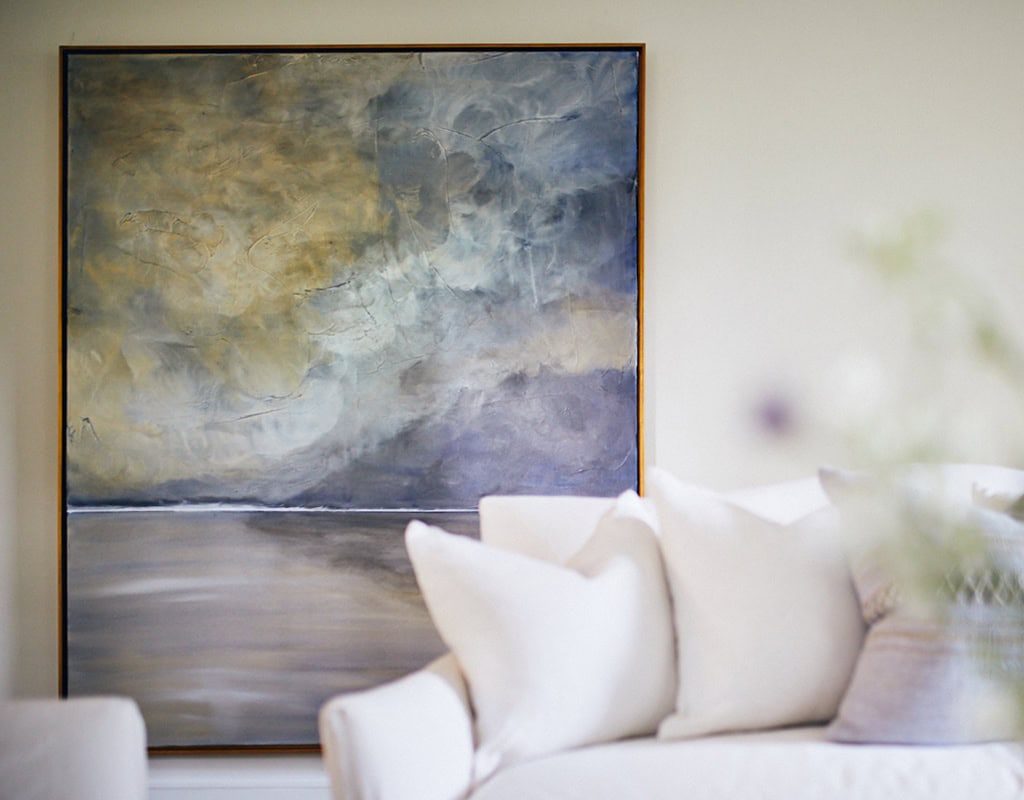
Your work is characterized by vibrancy of light, color and layering—how does your love of nature influence the textures and motion you bring to canvas?
Nature is my muse, and living on the East Coast has been a constant source of inspiration for me. Over the years, I’ve noticed that my art often mirrors the season at hand. In the spring, I’m drawn to painting murals and using brighter colors. Summer brings landscapes with sunsets stretching across the horizon, while in the fall and winter, my landscapes take on a warmer, moodier tone.
Which masters have most influenced your approach, and how do you translate their impact into your language of abstraction?
I could never pick just one artist, as my work has been influenced by all of them. It’s as if my brush is guided by everything I’ve absorbed from them. I’ve spent countless hours in museums, sitting on benches, simply staring at their canvases. I try to dissect the mastery of their work, studying it from every angle—just short of standing on my head!
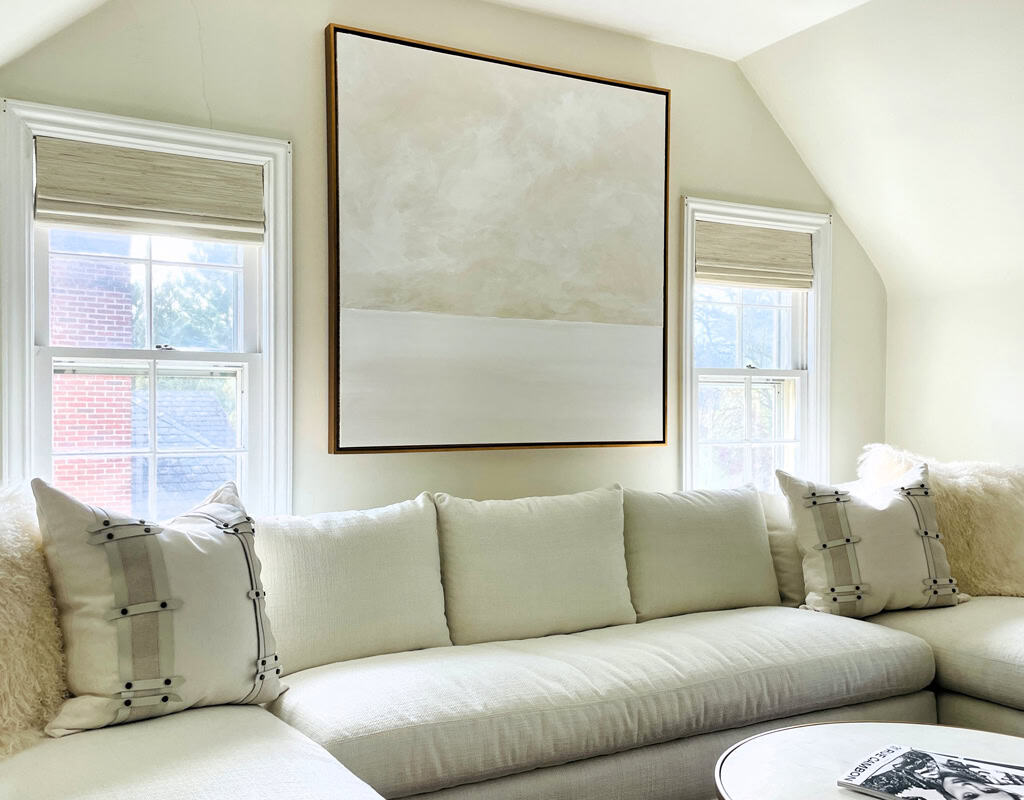
You work at large scale—what challenges and emotions come with painting life-size canvases, and what experiences do you hope to evoke in the viewer?
A large canvas in a small room can make a room feel bigger, creating visual volume, while the same size canvas in a large room is balanced and proportionate. A big piece of art can transform a room in so many ways—sometimes, a canvas that stretches from floor to ceiling brings the eye up and can make ceilings seem higher. A large canvas can even replace the need for a piece of furniture. It brings scale to a space, offering a sense of drama without the clutter.
Your paintings appear abstract up close, but reveal detail at distance—can you speak to the intention behind that shifting perception?
When I’m trying to make sense of something, I often pause and imagine the situation from a distance. In both art and life, distance offers me a clearer perspective. Guided by this principle, my art imitates my life—allowing me to observe and understand without focusing on the insignificant.
What does it mean to you that your collectors feel “a connection,” and how does viewer interpretation complete your work?
Abstract art allows for the audience to bring in their own experiences. The viewer is the arbiter of whether a canvas is significant to them. Art is personal. What I paint is personal. When a collector connects with my work, it feels like a meeting of minds. It’s wonderful to create something that stirs emotion or evokes a memory in someone I’ve never met—yet, in that moment, we find common ground over a work of art.
“I am endlessly grateful that I get to paint. I treat every canvas with the utmost respect. I feel fortunate to be able to connect with so many people, often providing them with something that brings a smile or takes them to a happy place. What more could I ask for?”
Can you share a moment of experimentation—an idea or technique you tried that surprised or transformed your practice?
Experimenting with texture, depth, the play of light and the balance of a canvas took years to perfect. Yet, each time I start with a blank canvas, my approach evolves. Layering is essential to creating lift and the reflective quality that defines my work. Every time I step into my studio, I discover something new.
You’re constantly seeking knowledge—what new materials, styles or artists are inspiring you lately?
Richard Diebenkorn and Robert Motherwell have been on my radar lately—I just can’t get enough of their work. Who knows who will be next? My eyes are always wide open, eagerly awaiting the next discovery.
Your work shows across the U.S., Europe and Asia—how do different audiences respond to your art, and what have you learned from exhibiting internationally?
The human experience is universal—people are people. We all seek beauty, peace, and perhaps the recollection of a cherished memory. Art has the power to bridge the differences that often divide us. We don’t need to speak the same language or share the same background to find peace, harmony and a connection to a work of art.